
Creative Engineering in the PMB2 Lab: Students Design 48‑Well Electrophoresis Combs to Boost Genetic Diversity Research
Creative Engineering in the PMB2 Lab: Students Design 48‑Well Electrophoresis Combs to Boost Genetic Diversity Research
The Plant Molecular Biotechnology‑2 Laboratory (PMB2 Lab), one of the research laboratories under the Department of Agronomy and Horticulture, continues to cultivate not only scientific expertise but also innovation and creative problem‑solving among its students. One of the main research focuses in the PMB2 Lab is the application of molecular markers for plant genetic diversity assessment, an approach that requires efficient and high‑capacity agarose gel electrophoresis.
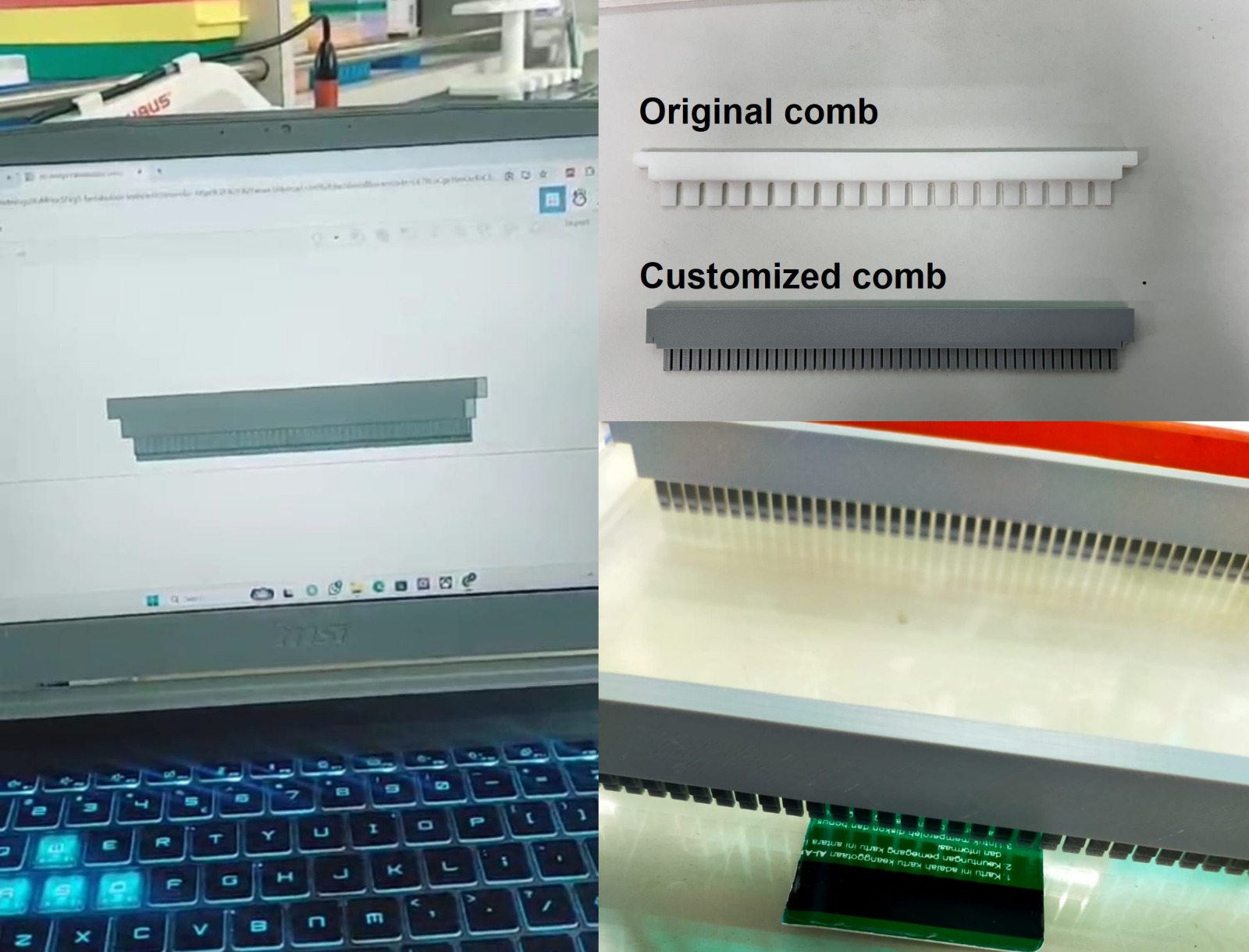
However, the existing electrophoresis equipment in the lab was designed with a limitation: standard combs can produce a maximum of 22 wells per run. For genetic diversity studies—where larger sample sizes improve reliability and resolution—this constraint often forces students to divide their samples into multiple runs, increasing time, cost, and workload.
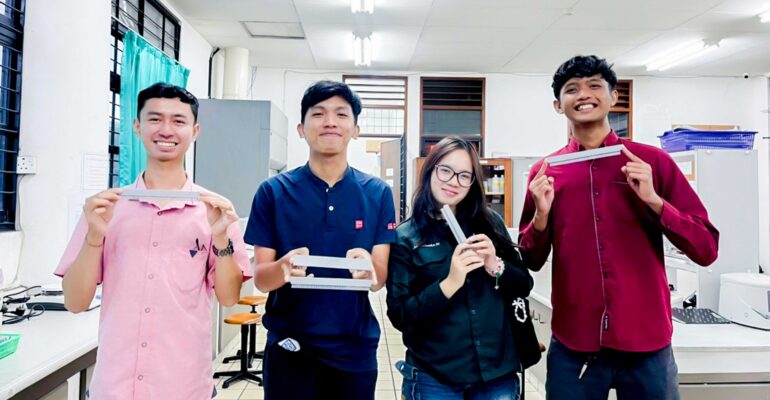
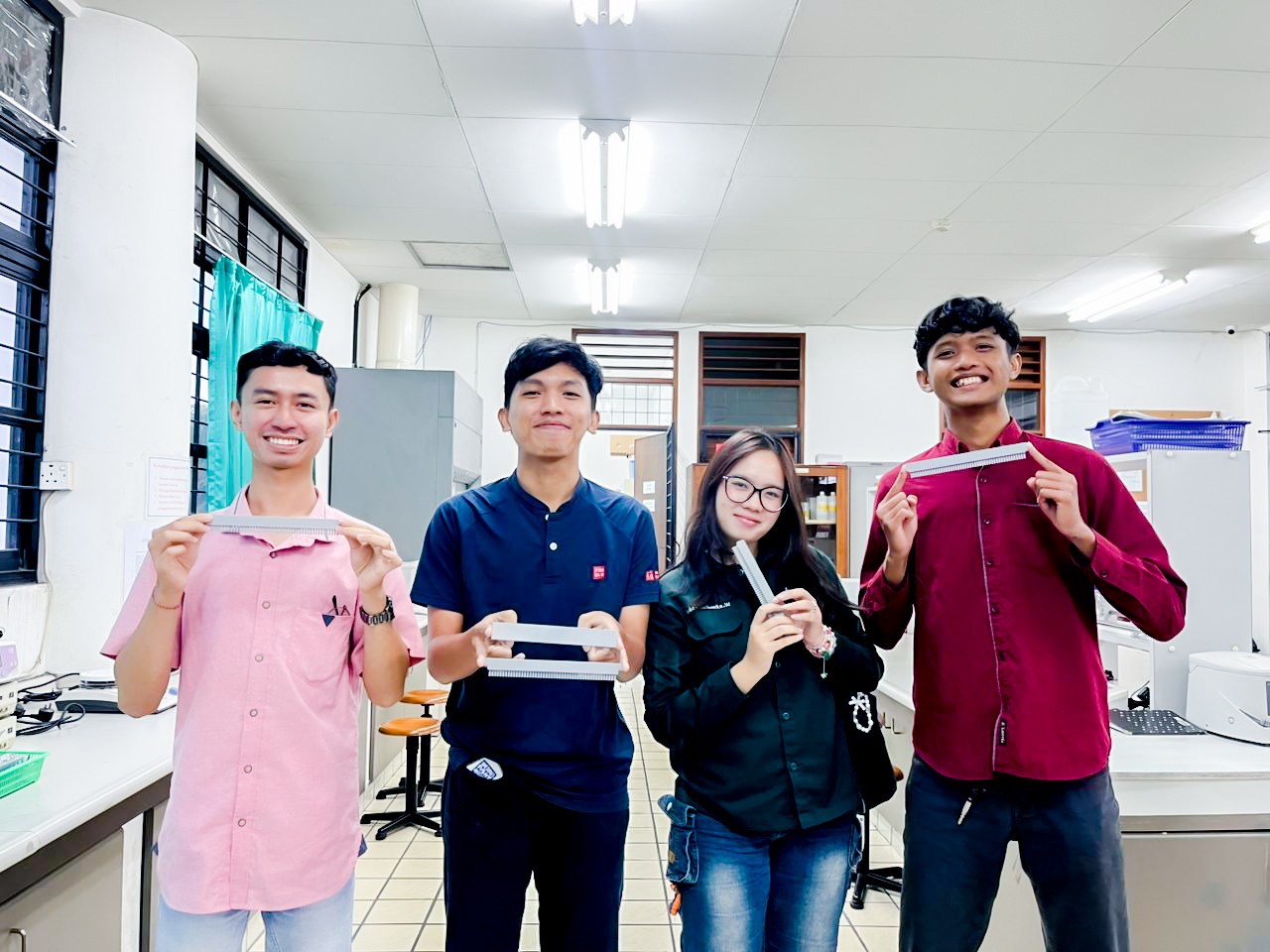
Recognizing this challenge, a group of four undergraduate students took the initiative to engineer a practical solution. Under the guidance of Dr. Sintho Wahyuning Ardie and Mr. Yudiansyah, the supervisors in PMB2-Lab, the team designed customized 48‑well electrophoresis combs capable of doubling the number of samples that can be analyzed in a single run.
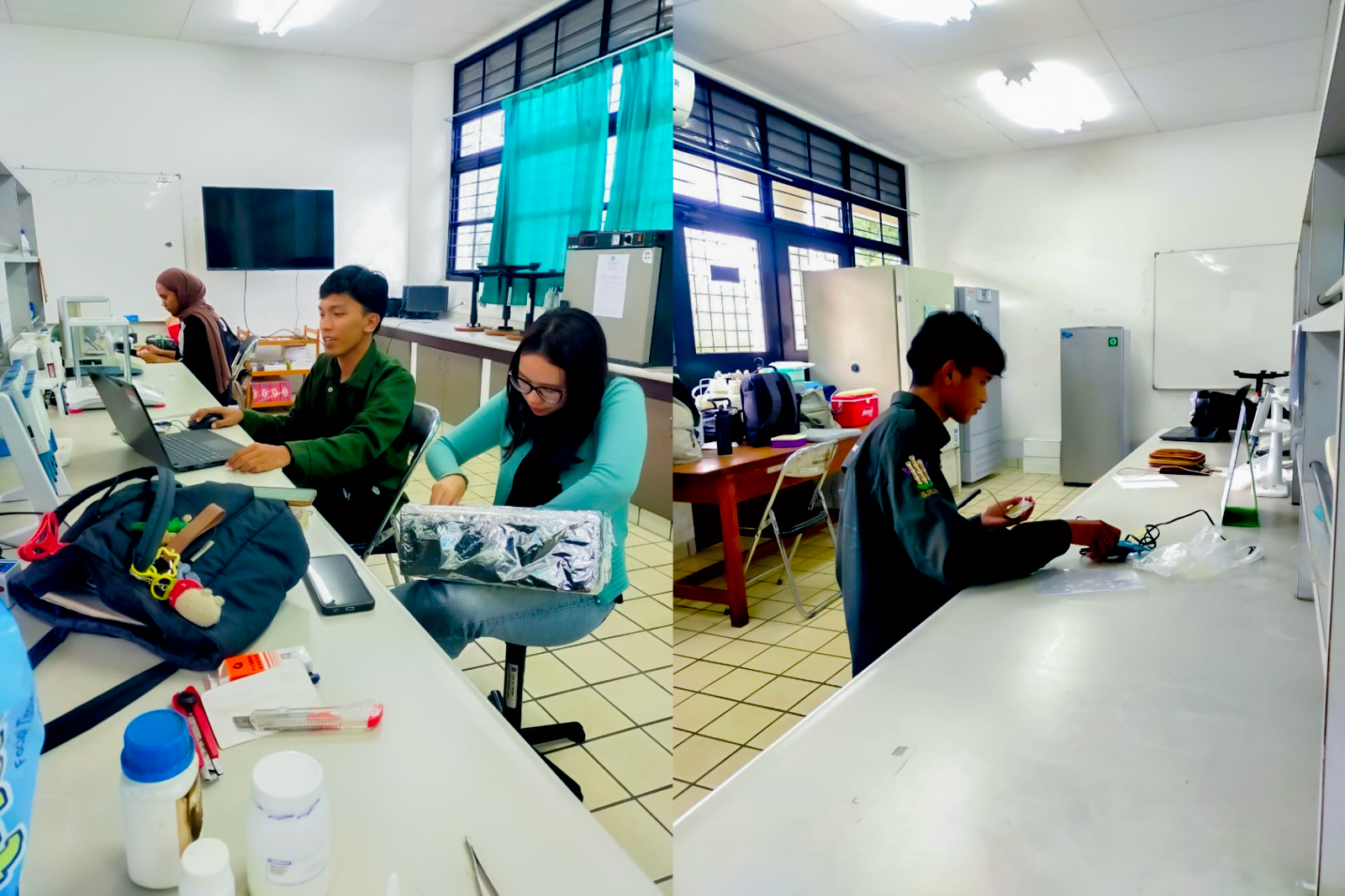
The group was led by Aditya Arya Pujiatmoko (8th semester) and supported by three enthusiastic 6th‑semester members—Muhammad Hanif Izzuddin, Hamid Ali Mukti, and Gabriella Sweta W. Working collaboratively, they created the comb designs using Canva and additional digital design tools. These designs were then fabricated using accessible 3D printing services, allowing the students to obtain the custom‑made combs at an affordable price.
The first prototypes did not perfectly match the electrophoresis trays, but this did not discourage the team. Instead, the students refined the designs and made practical physical adjustments—such as trimming edges and adding small supporting parts—until the combs fit securely and functioned optimally.
The results speak for themselves. The student‑designed combs have already been successfully used by one Master’s student and one Doctoral student in the PMB2 Lab, demonstrating their reliability and immediate impact on ongoing research.
This initiative showcases how creativity, curiosity, and a willingness to solve real laboratory challenges can produce innovations that benefit the entire research community. The PMB2 Lab is proud of these students’ achievements and hopes their story encourages more students to explore inventive solutions, push boundaries, and take ownership of their scientific journey.
Innovation in science does not always require expensive equipment—sometimes it begins with an idea, a simple design tool, and the courage to try.
[swa]