
Exploring Research and International Experiences of IPB University Master’s Students in Plant Breeding and Biotechnology through the TEEP Program in Taiwan
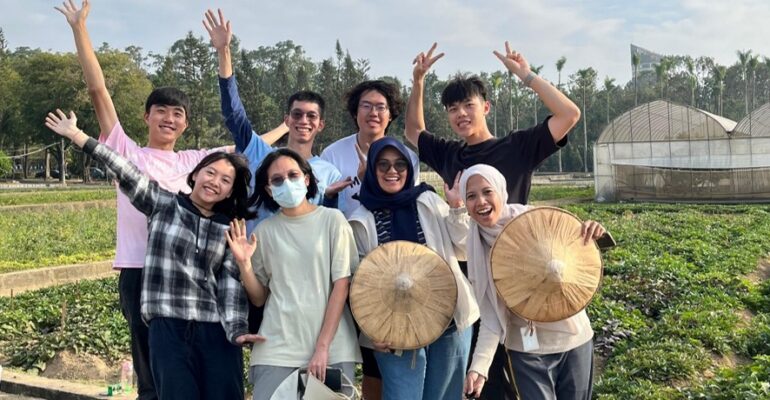
Exploring Research and International Experiences of IPB University Master’s Students in Plant Breeding and Biotechnology through the TEEP Program in Taiwan
Nurul Hikma and Siti Nur Asiyah Wardah, master’s students in the Plant Breeding and Biotechnology Study Program at IPB University, participated in the Taiwan Experience Education Program (TEEP) from January to March 2026 at National Chung Hsing University (NCHU), Taiwan, under the academic guidance of Prof. Dr. Dewi Sukma (IPB University) and the supervision of Dr. Shu-Yun Chen. This program serves as an international learning platform that enables students to engage directly in research activities, broaden their academic perspectives, and adapt to a global academic environment.
During their stay at NCHU, Nurul Hikma conducted chloroplast and mitochondrial genome assembly, followed by comparative genomic analyses of Vitex cofassus. Wardah was involved in a research project focusing on transcriptomic data analysis to examine differences in gene expression between Tagetes patula and Tagetes erecta. Through this work, she learned the RNA-seq analysis pipeline, including quality control, trimming, sequence mapping, and the interpretation of gene expression across species. Dr. Shu-Yun Chen also provided access to high-performance Linux-based computers, enabling efficient large-scale computational analyses.
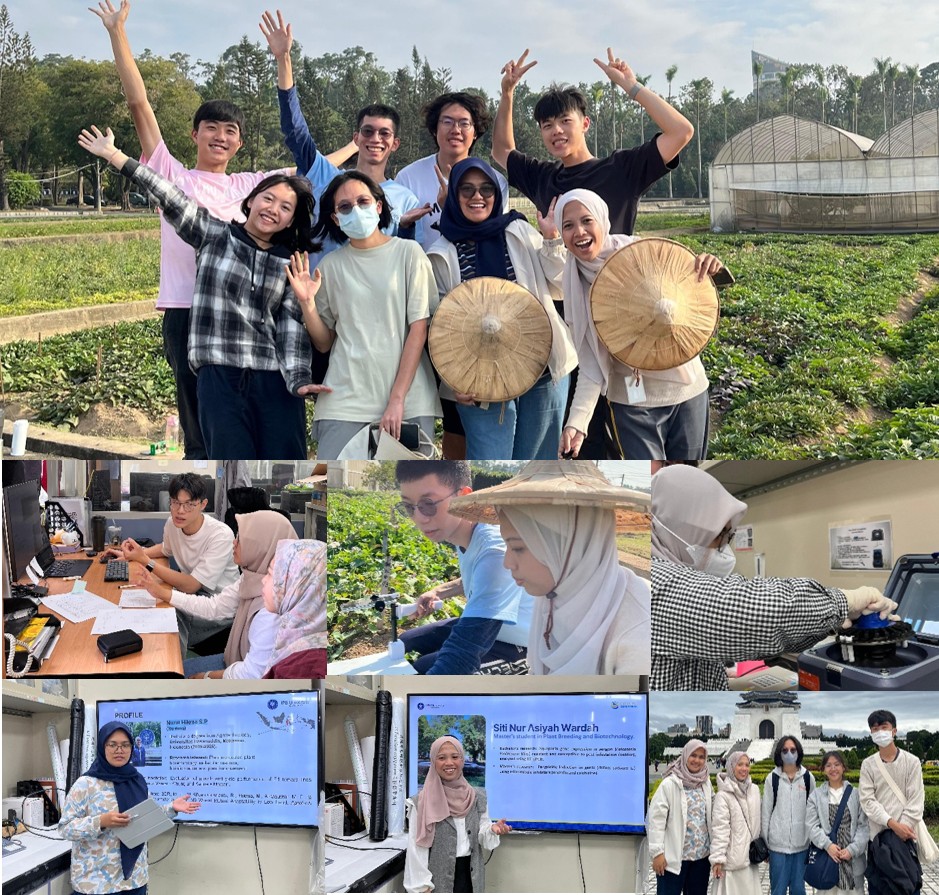
As part of their academic training, they were introduced to Genome-Wide Association Studies (GWAS), a genomic approach used to identify associations between genetic variation and phenotypic traits in plants. During practical sessions, they gained hands-on wet-lab experience in DNA isolation and preparation, as well as training in the use of molecular laboratory equipment. They also conducted phenotyping and field observations on sweet potato plants at the Taiwan Agricultural Research Institute (TARI), Chiayi Branch.
In addition, they were introduced to the ddRAD-seq genotyping workflow, including library preparation and sequencing processes. They learned how sequencing data were processed to generate SNP calls and Variant Call Format (VCF) files. In parallel, they explored image-based phenotyping using YOLOv8 for object detection, supported by data annotation through Roboflow and image processing using OpenCV. The resulting genotypic and phenotypic data were then integrated and analyzed using TASSEL and GAPIT for genotype–phenotype association analysis.
Nurul and Wardah delivered academic presentations at both the beginning and the end of the program. The initial presentation outlined their research plans during their stay in Taiwan, while the final presentation highlighted the results and key findings of their research. These sessions enhanced their scientific communication skills in an international academic setting.
Beyond research activities, the TEEP program also provided opportunities to explore Taiwanese culture and environment. Together with their laboratory colleagues, they visited several regions, including Taipei, Miaoli, and Qingjing Farm. In addition, they experienced observing Ramadan while living as part of a minority Muslim community. With the support of PPI NCHU, they received assistance in various aspects of daily life, which facilitated their adaptation to the new environment. These experiences became an integral part of their international journey, strengthening their adaptability, communication skills, and cross-cultural understanding.

Participation in the TEEP program at NCHU reflects the strong commitment of IPB University students to engage on a global scale. Through this experience, Wardah and Nurul not only enhanced their academic and research capacities but also built international networks and gained new perspectives that are expected to contribute to the advancement of plant breeding and biotechnology in Indonesia.
[snaw/ nh]